




Following the Great Migration: Travel That Truly Matters
This Great Migration “season” in East Africa has been accompanied by a significant amount of comment recently as this wildlife phenomenon becomes exposed to the over-tourism connundrum much reported on in other parts of the world.
Africa has long seen itself as the antidote travel option to overcrowding and the bad behaviour centred on specific sites or locations. It has been sobering to realise that – coming out of covid and fueled by social media – our home continent is coming face to face with the same dark side of the travel industry.
I was interested to see the situation for myself in late August as I led a 2-week safari through Tanzania and Kenya, much of our time spent in the Serengeti and Maasai Mara. We stayed on private concessions, within national park and reserve areas and in community-owned conservancies contiguous to the parks.
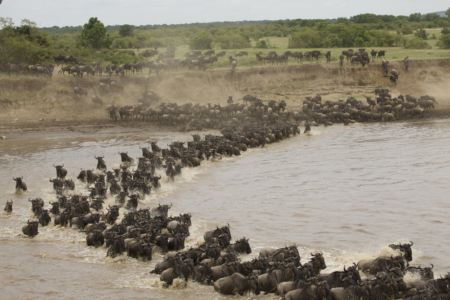
The Great Migration was magnificent – many many thousands of animals dominating our senses and bringing both energy and excitement for the power of natural systems that is hard to convey or replicate. Unfortunately, the reality I observed was that in the national parks and reserves there was vehicle crowding and negative behaviour from guides and their guests as the urgency to experience a sighting or river crossing and “get the shot” influenced the human (and in some cases also the animal) behaviour in protected areas seemingly lacking in rules or the necessary rules enforcement by park officials.
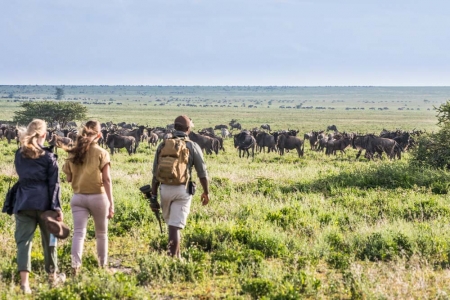
The experience in the private concessions and conservancies was glaringly different. We were quite alone as we enjoyed countless intimate sightings of migrating herds, predators and plains animals. Understanding at the same time we were contributing to conservation successes and community driven initiatives was a tangible bonus.
So, what should our guests, guided by our travel design team, consider when safari planning going forward, and how do we all – in our own way – contribute to a more informed and sensitive travel experience when coming to Africa?
Here are some points to consider:
- The Great Migration is a year-round natural movement. One of the best times to see the herds is when the wildebeest are calving in the southern Serengeti early in the year (January-March). There are also wonderful windows to view the migration in the early and late dry seasons (May-June and October) in both the Serengeti and Maasai Mara.
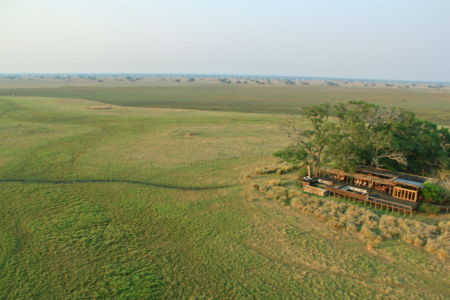
- Private concessions and community conservancies have proven to be successful conservation models whilst providing regulated environments to allow for private and intimate safari experiences. They also typically have greater flexibility to allow for diverse activities – for example walking, horse riding and cultural experiences.
- There are many remote wilderness areas and park options throughout Africa that provide as rich a safari experience as the better known and more visited parks. In East Africa consider Ruaha and Katavi in south/western Tanzania, and Tsavo-Chyulu Hills or the northern frontier in Kenya. We take pride in having personally researched these wilder areas (and worked in many of them) and actively encourage our guests to visit these wilderness locations. As a traveller, your positive impact is greater here and you give nothing away in terms of the safari experience.
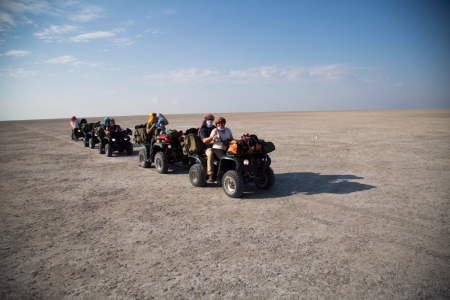
- If you truly want to escape the crowds, consider countries and destinations off the traditional safari circuit. Zambia has a wonderful, wild migration in the Liuwa Plain NP, which I wrote about previously. This combined with the Busanga Plains in Kafue NP for example and other diverse and wild parts of the country make for a superb safari experience. In Botswana I witnessed in April this year the Makgadikgadi Pans migration which was extraordinary and can easily be combined with the private concession areas of the Okavango Delta.
The Great Migration remains something everyone should experience. The sheer scale in numbers of animals, their sounds, movement and energy, and bearing witness to that is a unique and fascinating experience all nature lovers will appreciate.
Now more than ever it is critical to carefully plan how and where to see the herds. We all need to interrogate where our travel spend is going and how we can create the most intimate and natural experiences, all whilst simultaneously providing the most benefit to invested communities and conservation efforts.
Perhaps a metaphor to guide a more considered travel (and indeed life in general) planning approach for all of us – to seek the nexus of high quality experiences and tangible, meaningful contributions.
We look forward to more considered safari planning with you.


